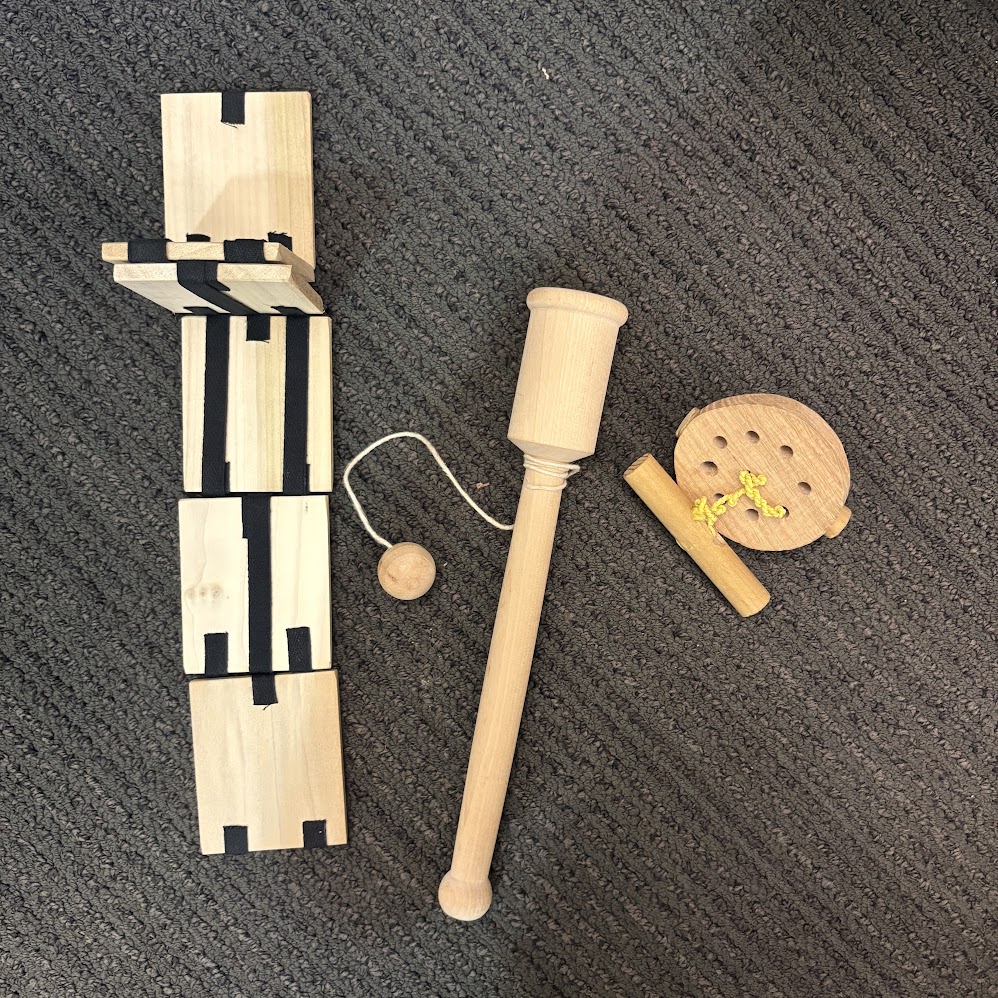
Summer has kicked off at Bethabara, mostly consisting of summer tour groups from local summer camps! I have assisted with two summer camp groups so far, and next week I will be running a station by myself. The children are often younger, and since it is a summer camp, our activities are more based on fun than education. The tours start with a small video or story to make the children think about how their lives are different from the lives of Moravian children in the 18th century. After they have started thinking, they rotate through 4 15min stations to better understand the lives of children in Bethabara. One station is farm chores, where the children learn how to milk a cow and hunt for eggs laid by a chicken. The next station consists of toys played by children in the 18th century. My personal favorite is called the buzz saw; it’s a very addictive game that takes skill! The next station is a water relay that the children relate to how water would be carried from wells to the homes daily. At the final station, the students were allowed to decorate paper tricorn hats to understand how people expressed themselves in the 18th CE through hats and pins, much like how they expressed themselves through clothing and stickers on water bottles. The summer tours were very fun, and I am excited to run a datation alone next week. I also got my first tour! It was a solo tour I gave to my boss, Jacob, but it was required to “graduate” and be able to give tours to guests! I was very nervous (especially considering he knows a lot more about the history of the site than I do), but it ended up going very well, and I got really good feedback I can incorporate into my tours when I finally give one! There are 2 tours offered at Bethabara: a timeline tour and the 1788 Gemienhaus tour. I gave a timeline tour because I felt more comfortable since the Gemienhaus was closed when I first started. The timeline tour starts from the original 15 single brothers who arrived in Bethabara in 1753, all the way to the transition into rural farming land in the 19th CE. The tour covers many different areas of American history and how it impacted the Moravian settlements in the area. Some of them include the French and Indian War, the Revolutionary War, the topic of slavery, and typhus outbreaks. The tour is supposed to be more heavily focused on the people in Bethabara, instead of the tings. I think this resonates with guests more because they can feel a personal connection to the site, instead of seeing barren building cellars, since the only standing original building is the 1788 Gemienhaus. In order to give tours to guests, I will have to complete a Gemienhaus tour for Jacob as well! Hopefully, I can give my tour next Thursday, so I will be able to give public tours soon!


Leave a comment